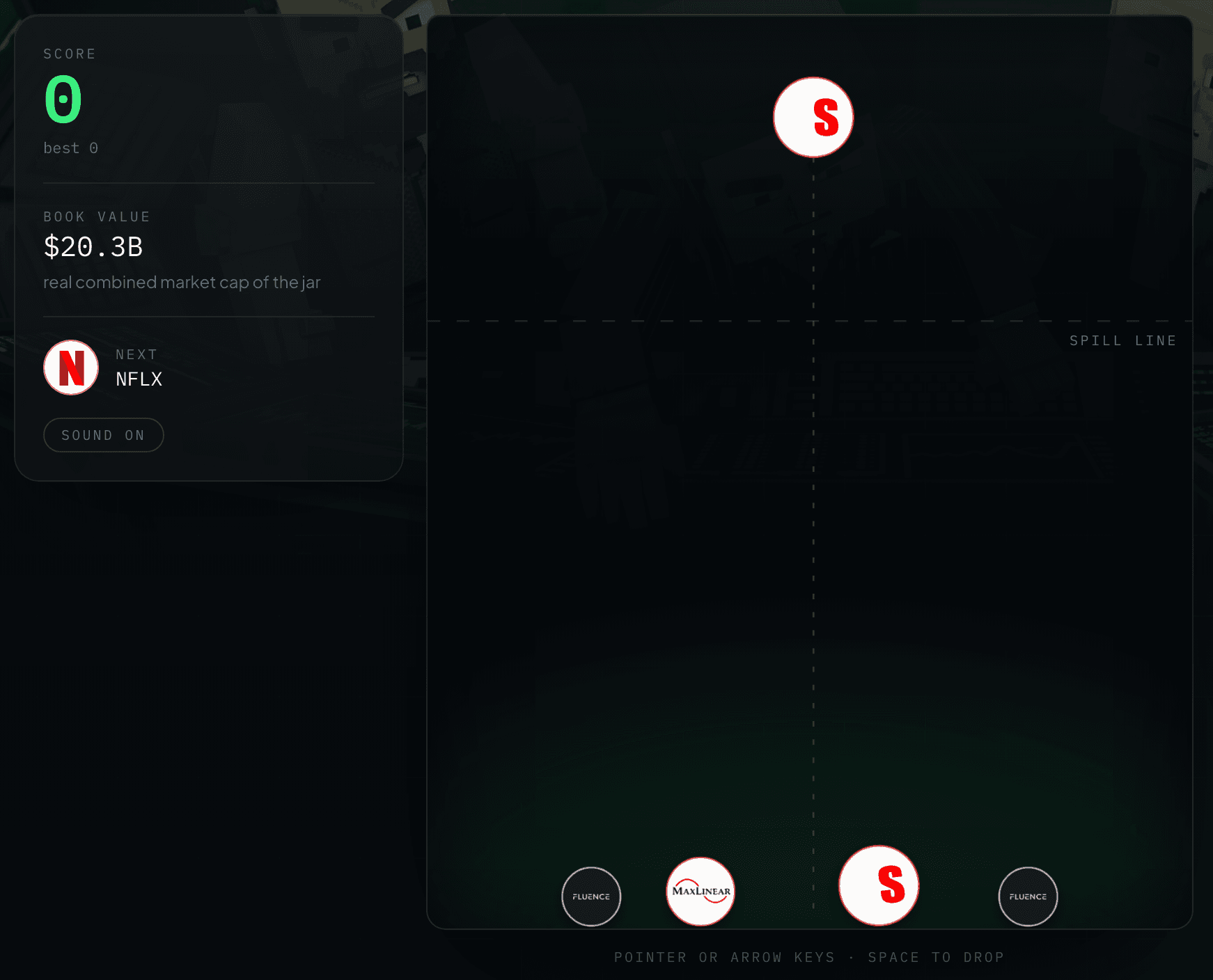
step 01
Drop a company
Move left and right, then click to release. Only the six smallest of the eleven are ever dealt, so anything above QCOM has to be built by merging.
A run takes about a minute. You drop companies into a jar, match them into bigger ones, and try not to fill the jar past the line.
Move left and right, then click to release. Only the six smallest of the eleven are ever dealt, so anything above QCOM has to be built by merging.
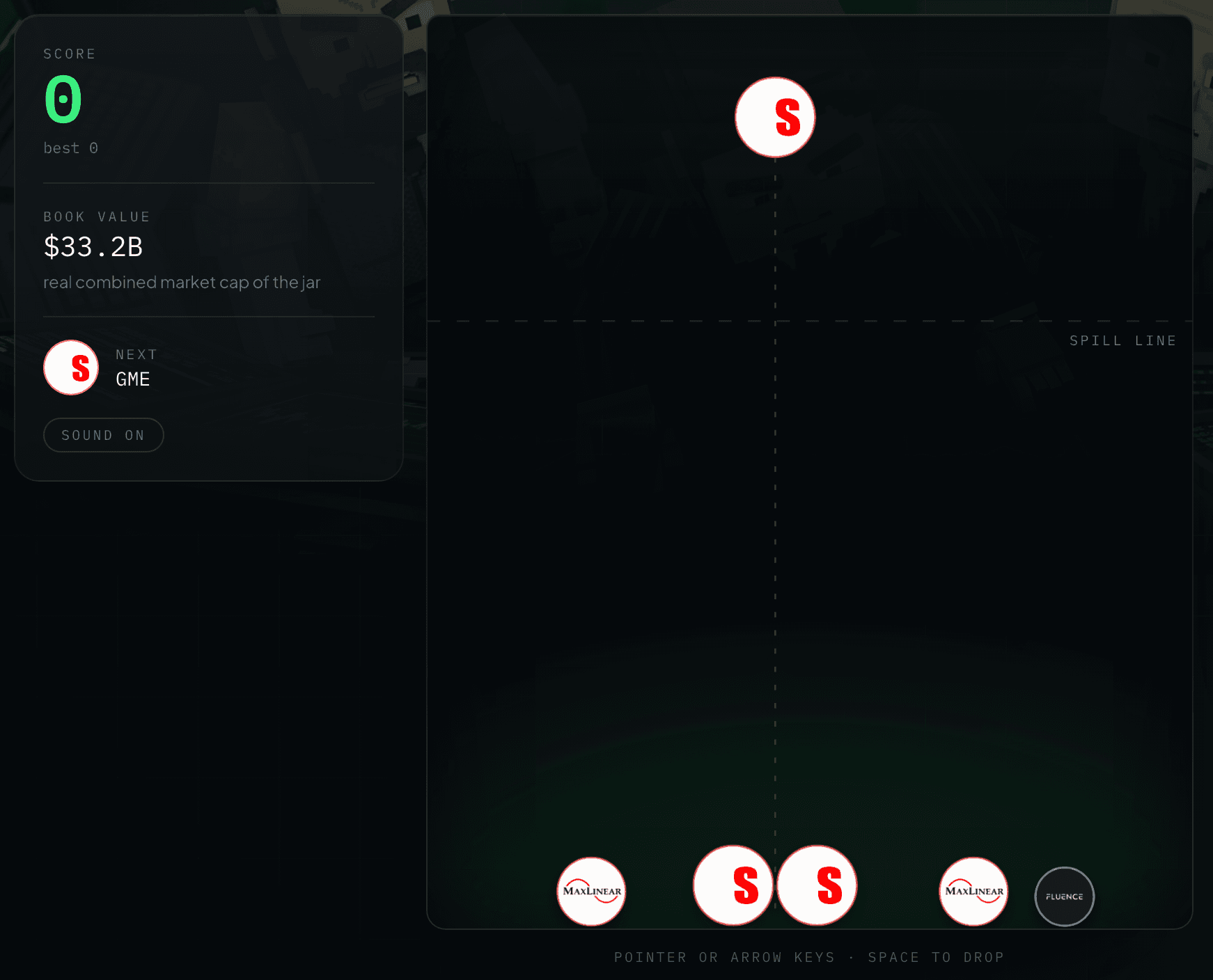
Land GME on GME and they become RDDT. Merges chain, so one good drop can set off four in a row.
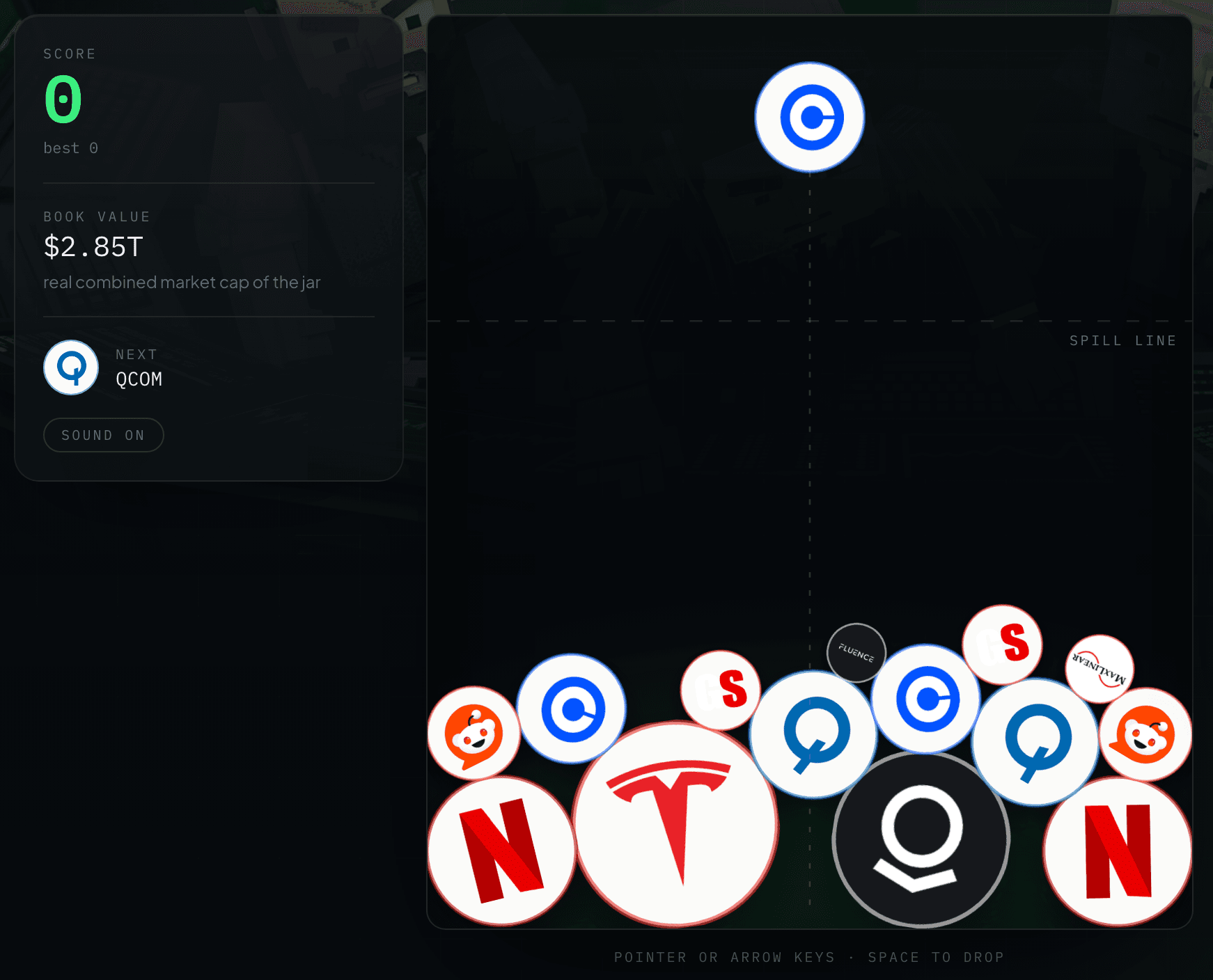
Eleven companies, smallest to largest, then a twelfth rung that is all of them added together. The order is the real ranking on Robinhood Chain, not a made-up one.
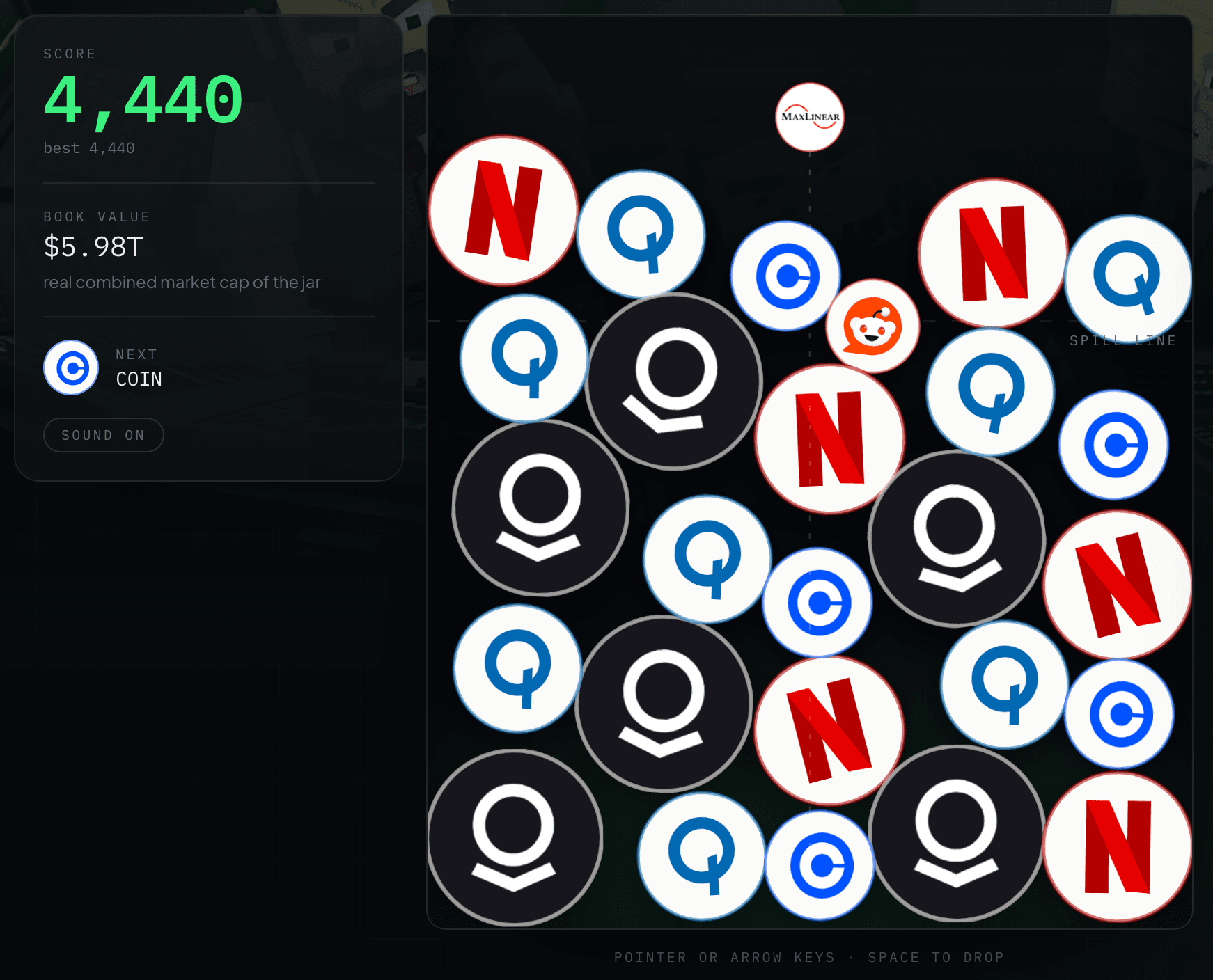
A chip resting above the dotted line for one second ends the run. Big chips eat room, so keep the small ones off the top of the pile.
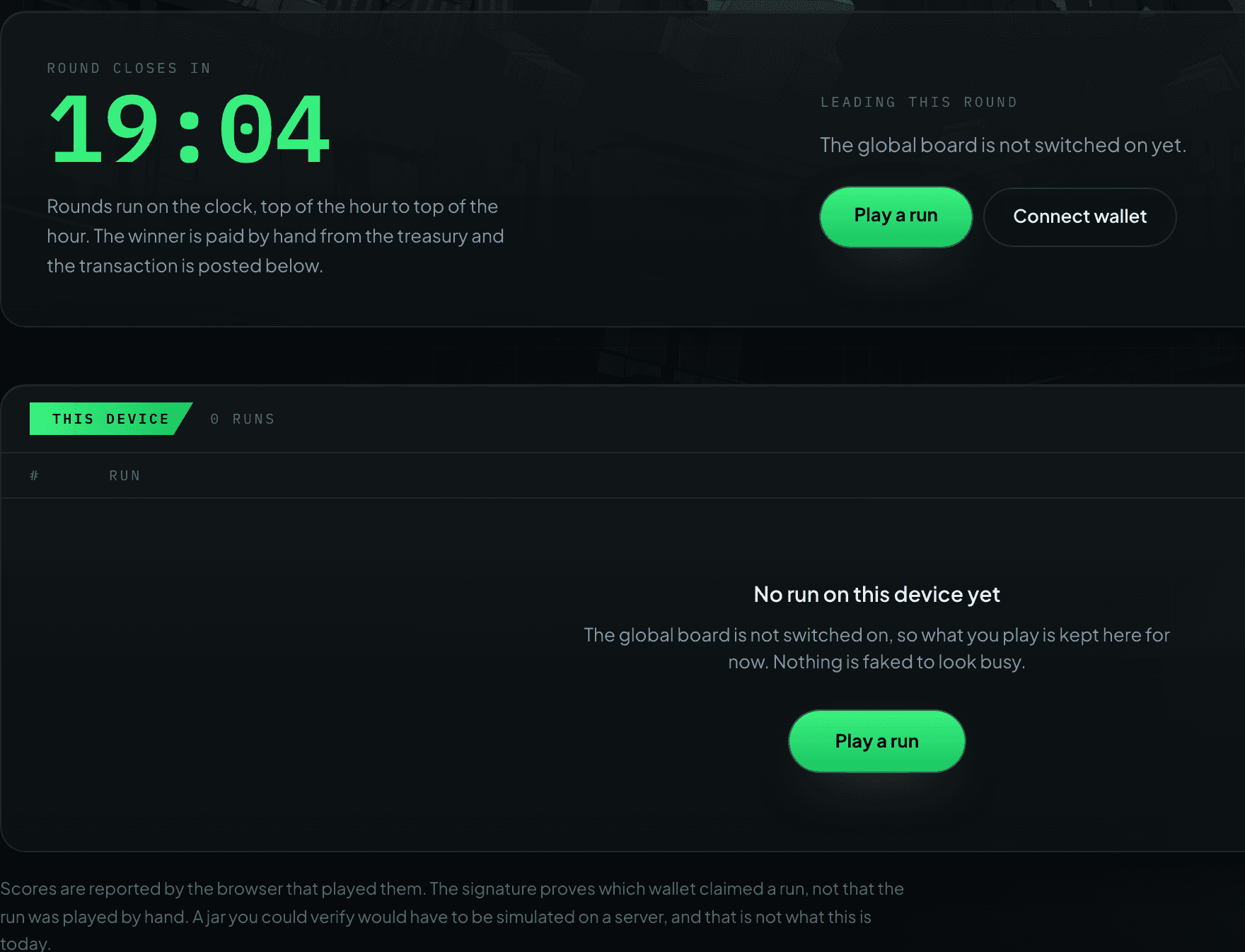
Playing is free and needs no wallet. Connect one and sign your run to claim a rank. Every hour is its own round, and whoever is top when the clock hits :00 gets paid in tokenized stock.
 MXLMaxLinear$6.8B+30
 GMEGameStop$8.6B+60
 RDDTReddit$31.1B+100
 COINCoinbase$40.5B+150
 QCOMQualcomm$176.3B+210
 NFLXNetflix$308.7B+280
 PLTRPalantir Technologies$413.2B+360
 TSLATesla$1.30T+450
 AMZNAmazon$2.96T+550
 NVDANVIDIA$5.42T+660
 MARKETAll 42 combined$36.88T+780
Every run is free and needs no wallet, no signup and no gas. Nothing in the game is for sale.
A wallet is asked for one thing: signing a short message so the score can be posted under your address. It never spends anything.
Each hour is scored on its own. Whoever tops the board when the clock hits :00 wins that round and is paid by hand from the treasury; the transaction is posted on the leaderboard. Your best all-time run keeps its own separate ranking.
Two NVDA merge into a chip worth every company on the chain added together, $36.88T. Two of those cancel each other out, clear the space and pay 1,200 — the only way to take something off the pile, and the reason a run does not simply stop at the top.
A FLNC stranded on top of a NFLX is dead weight for the rest of the run. Drop the small chips into the gaps at the sides, not onto the middle of the pile.
Sort the pile so it climbs in one direction. Two towers growing at once meet in the middle and leave a hole you can never fill.
Two chips become one that is smaller than both of them together, so the pile drops every time you match. When you are close to the line, look for the merge that collapses the most, not the one that pays the most.
The read-out on the left shows what is coming. Plan the current drop around it, because a big one landing on a flat pile is much better than one landing in a crater.